
Articles
Our team brings fresh perspectives, proprietary data and consumer insights that help brands thrive.
Insight you can act on: Fresh perspectives powered by trusted research.
Changes to BNPL: Good for consumers, bad for business?
Buy Now Pay Later (BNPL) firms have become a staple payment option for cash-strapped Brits looking for ways to help them buy what they need during the ongoing cost-of-living crisis. It's therefore no surprise that 2 in 3 (64%) have used BNPL to make a purchase at some point. Until now, BNPL options have offered consumers a quick and easy way to access credit, helping them spread the cost of larger purchases, manage cashflow and avoid interest payments.
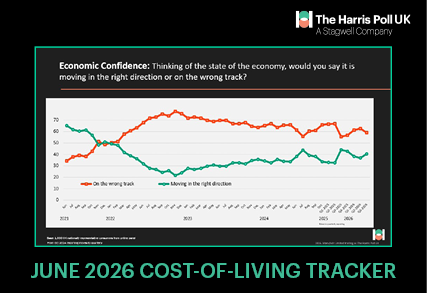
Resilient for Now: The UK withstands early Middle East shocks, but fragility and risks remain
Our latest quarterly update suggests the UK economy has so far absorbed the initial shocks from the Middle East conflict without tipping into outright recession or triggering a fresh, energy-led inflation surge. That resilience is reflected in a small uptick in economic confidence and in consumers’ self-assessed finances in our Q3 Outlook, after three quarters of decline. Yet the improvement is only tentative. As higher fuel and energy prices tied to the conflict feed through the economy during the second half of 2026, we could witness delayed inflationary pressures. Consumer behaviour also shows households are not yet convinced enough to increase spending significantly.

Trust and Financial Guidance: The support gap consumers are trying to close
Managing our money has probably never been more important. Yet for many consumers, particularly younger adults, knowing where to turn for trusted financial guidance remains a challenge. The UK cost of living crisis remains a very real issue; consumers are often having to choose between spending now (at times just to keep their heads above water) vs trying to save for the future.
So, while managing money well is vital, do consumers feel they have the knowledge and support to do it effectively?

The Last Mile Matters: Why delivery experiences are critical to customer retention
We’re buying more online than ever before. Retailers have spent years optimising the online checkout journey, but for many customers the real moment of truth comes after they click “buy”. Customers expect to receive their items quickly and efficiently, but in many cases, this isn’t happening.
Delivery issues are commonplace, with over half (58%) of UK consumers who’ve received a delivery in the last six months experiencing a problem. Clothing and/or footwear (43%) and grocery (30%) were the sectors where consumers were most likely to report delivery problems.
Outsourcing fulfilment to courier companies is now standard practice. Just 9% of deliveries are made by retailers’ own delivery teams, many of these in the grocery sector. However, even where fulfilment is outsourced, poor delivery experiences can still have significant consequences for retailers.
The Cost of Getting There: How rising fuel prices are reshaping everyday spending
The everyday journey is no longer routine
Have you noticed fewer cars on the roads lately? It’s not your imagination. For many of us, it’s now something we think twice about. Rising fuel costs are reshaping how, when and why people travel.
Our latest research shows that 59% of UK drivers have used their vehicle less in the past three months. This is not just about driving less. Even routine journeys are now being questioned.
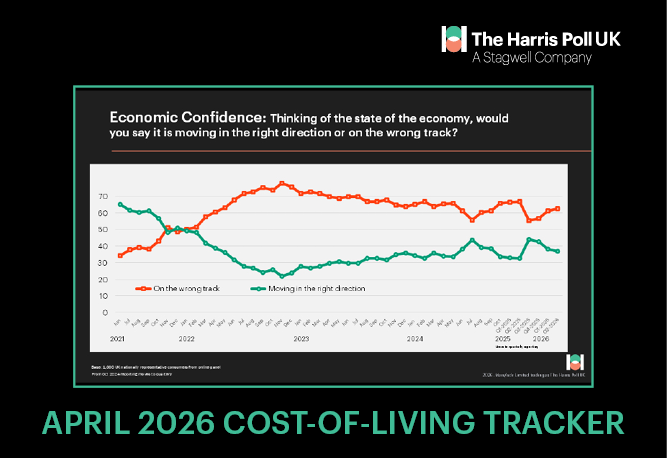
From Domestic Pressure to Global Shock: How the cost-of-living crisis is evolving
Since 2020, we have tracked UK consumer sentiment and behaviour as the cost-of-living crisis has unfolded through multiple phases.
Our latest Q2 2026 data points to a clear shift: underlying pressures have not disappeared, but the drivers are changing. External factors are reasserting themselves, adding a new layer of volatility just as households were beginning to adjust.

Looking Beyond The Purchase Price: What car buyers want in 2026
In our recent article, Spending with care: the current reality of big-ticket purchases in the UK, we explored how consumers are continuing to engage with major purchases, but with a more considered mindset. Spending has not stopped, but expectations around what feels manageable and worthwhile have shifted.
Automotive brings that mindset into sharper focus. It is a category where the financial commitment is high, the decision is rarely impulsive, and the consequences of getting it wrong feel more significant. As a result, it shows more clearly what consumers need to move from consideration to action.
Our data demonstrates what car finance providers need to be thinking about when shaping their propositions and customer conversations in 2026 and beyond.

The Exit Experience: A new battleground for edge in the subscription economy
Subscriptions are built on the promise of convenience. Increasingly, however, that promise is being tested not at the point of sign-up, but at the point of exit. From streaming and gaming to fitness and food delivery, they have reshaped how people access products and services, offering flexibility and ongoing access that has quickly become part of everyday life. As subscriptions evolve, that promise is increasingly judged by how straightforward it is to leave.

The Forecast Effect: How weather apps are reshaping visitor behaviour
Whether it’s a family day out, a visit to a heritage site, or a spontaneous trip to a theme park, the British public increasingly turns to weather apps as their decision-making compass. For operators of outdoor attractions, these forecasts have become a critical, and sometimes frustrating, part of the visitor economy. Some attraction owners report that a single rain symbol can cost them up to £137,000 in a day, and our research supports the impact of rain in the forecast, with an increase from 20% to 40% for the chance of rain driving an incremental third of consumers to change their plans.
Based on a nationally representative survey of 1,000 UK adults, our latest research highlights a clear behavioural shift: weather apps are not just influencing decisions, they are actively reshaping them.

The Rise of the Concession Model: What UK consumers expect from modern retail
From Next’s acquisition strategy to the growing concession model trend, the UK retail landscape is being reshaped. The high street is undergoing a structural shift as large retailers acquire struggling brands and expand concession models, redefining how consumers experience retail.
But this is not simply a change in format. It signals a broader rebalancing in what consumers expect from retail. Shoppers are open to greater convenience and consolidation, but not at the expense of brand identity, discovery or experience.
For brands and retailers, this creates a new challenge. Growth may come from scale and efficiency, but long-term value will still depend on how well these fundamentals are protected and delivered.
Short-term travel plans hold firm, but signs of hesitation emerge among UK consumers
Recent geopolitical tensions and disruption to international aviation routes have created uncertainty around how UK travellers may respond in their holiday planning. In partnership with Travel Weekly, The Harris Poll UK surveyed a nationally representative sample of UK adults in mid-March 2026 to understand initial consumer reaction.
The research explored near-term travel intentions, recent shifts in booking behaviour, destination preferences, and confidence in travelling to or via Gulf destinations. It also examined how willingness to travel abroad varies across different time horizons over the coming year.
The findings offer an early indication of how global instability is shaping travel decision-making. They highlight the extent to which consumers are delaying commitments, reassessing risk and adapting plans rather than stepping away from overseas travel altogether.
Spending with Care: The current reality of big ticket purchases in the UK
Financial confidence in the UK remains fragile. Our latest Cost-of-Living data for Q1 2026 shows sentiment has deteriorated for three consecutive waves, with 62% now believing the economy is heading in the wrong direction.
Household finances are under pressure too. 56% say their financial position is unchanged versus last year and 25% say it has worsened, leaving just 19% feeling better off. Energy bills have risen again, food and drink prices are up 4.5%, and headline inflation reached 3.4% in December.

Love in the Age of AI: Why technology isn’t killing romance
Romance has always reflected the times we live in. From handwritten letters to text messages, candlelit dinners to app-booked experiences, each generation finds new ways to say the same old thing: you matter to me.
So as artificial intelligence becomes part of everyday life, it’s natural to wonder whether something meaningful might be lost along the way. Are algorithms and automation quietly cooling the emotional warmth of love?
In the light of Valentine’s Day this weekend, we look at new data from The Harris Poll UK, which suggests the opposite may be true.
Free Returns Aren’t So “Free” Anymore: Why that’s good for customers
For decades, “free returns” has been treated like a hygiene factor in online retail: a frictionless promise that keeps conversion rates healthy. But that model is now under increasing pressure from rising operational costs and could even become an historical anomaly.
Retailers are paying closer attention to returns behaviour, and customers who consistently push the system too far are beginning to feel the consequences. ASOS, H&M and Pretty Little Thing have all reviewed their returns policies or have actively closed accounts of serial returners.

Optimistic at Home, Uneasy About the World: What our latest data reveals
This past Monday was “Blue Monday”. Aside from sounding like a New Order song, it is often cited as the most depressing day of the year. The good news is that we made it through unscathed. The less good news is that the weather does not appear to have improved much since.
With Blue Monday falling this week, it feels like a timely moment to check in on our Optimism tracking and look at how positive UK consumers were feeling as we closed out December.

2025: The Year UK Consumers Took Control
UK consumers are rebalancing priorities, reassessing value, and seeking control - not just over their wallets, but over how they live, spend and connect. As we close the books on 2025, here’s our wrap-up of the four dominant themes we’ve seen in our ongoing research with UK consumers across sectors and social contexts this year.

Delivering Chaos: Christmas shoppers won’t wait for late parcels if strike threats become reality
For shoppers racing to get gifts under the tree, one thing matters above all else: confidence their parcels will arrive on time. And with Unite members at UPS balloting for strike action, our latest research shows something retailers can't ignore— shoppers are poised to change their festive buying habits the moment delivery reliability starts to wobble.
And the headline is clear: two in three shoppers would switch retailers if delivery strikes threaten Christmas orders.

The Heat (Anxiety) Is Rising: What consumers need as winter costs climb
As the cost-of-living crisis continues to shape daily life in the UK, heating has become a growing source of worry for many households. With the Government’s new budget landing today and prices still rising, people are heading into winter with a sense of uncertainty about how they will manage the months ahead. Staying warm is no longer a background consideration; it’s something people are planning around more carefully than ever.
Our latest research shows how this is affecting behaviour, budgets and wellbeing for households across the country.

Safety vs Savings: What brands must know as consumers reassess risk
As the cost-of-living crisis deepens, new data reveals a troubling shift: almost seven in ten Britons would consider choosing a less rigorously tested medication if the price was right. Despite valuing safety and quality above all else, rising costs are pushing many to make trade-offs they never expected to face. With trust wavering and concerns about authenticity growing, the pressure is mounting on brands—and the system—to help consumers feel protected.

Digital giants going offline: Is it their smartest move yet?
When Amazon Went Old School
Last week, something curious landed on my doormat: a colourful toy catalogue from Amazon.
At first, I was genuinely confused. A printed catalogue from Amazon? This felt completely offbeat for a brand that has built its empire on digital convenience and frictionless e-commerce. It seemed almost quaint.
But then I left it on the coffee table.