
Articles
Our team brings fresh perspectives, proprietary data and consumer insights that help brands thrive.
Insight you can act on: Fresh perspectives powered by trusted research.

Beyond the Review: What consumers expect from feedback today
Online reviews remain an important source of information for consumers. Our latest research shows that 95% use reviews when making a purchase or choosing a service, while 84% consider them an important part of the decision-making process. Among under-55s, that rises to 92%.
But while reviews remain influential, consumers are becoming more sceptical about what they read. Increasingly, they are looking beyond ratings alone and paying closer attention to how brands respond to and act on feedback.
The New Loyalty Playbook: Simplicity and Velocity for Share of Wallet
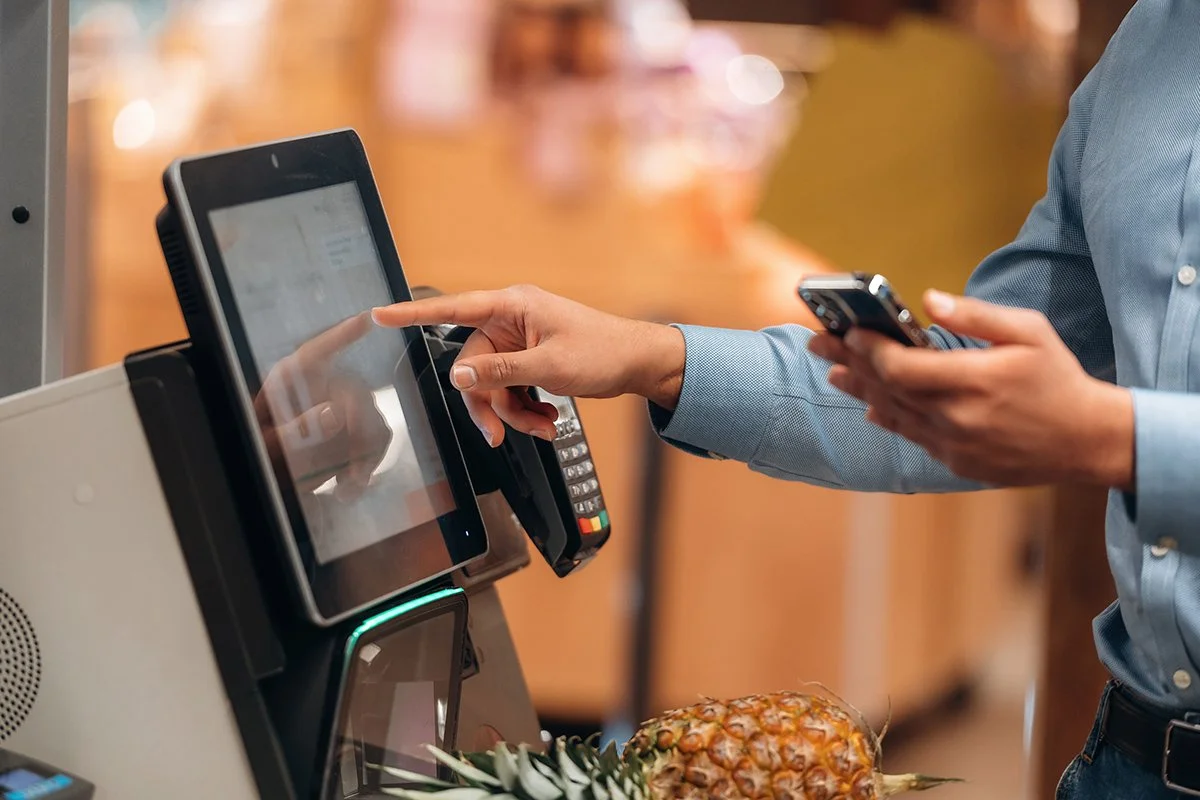
Loyalty has become a crowded and engineered element of retail. Most major retailers now offer some form of rewards ecosystem, yet many consumers remain underwhelmed, unconvinced, or simply disengaged. The assumption has often been that the answer lies in building richer programmes, adding more perks, or increasing personalisation. But our latest research at The Harris Poll UK suggests something different.
In fact, we are already seeing leading retailers move in this direction. The April 2026 relaunch of Sparks by Marks & Spencer is a timely example. The revamped proposition shifts toward ‘pounds, not points’, introduces a digital Sparks wallet, places greater emphasis on simpler monetary rewards, and aims to improve relevance and timeliness. Notably, the redesign appears to respond to several of the same themes our research surfaces: consumers want loyalty to feel simpler, more rewarding and easier to use. Whether Sparks succeeds remains to be seen, but strategically, it reinforces the broader shift underway.
Our data reveals a clear set of commercial principles for cutting through in today’s market, and they challenge some long-held assumptions about what drives loyalty success.
From Domestic Pressure to Global Shock: How the cost-of-living crisis is evolving
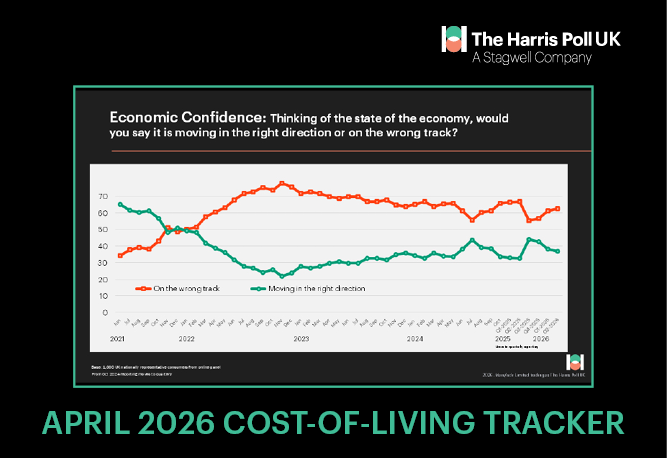
Since 2020, we have tracked UK consumer sentiment and behaviour as the cost-of-living crisis has unfolded through multiple phases.
Our latest Q2 2026 data points to a clear shift: underlying pressures have not disappeared, but the drivers are changing. External factors are reasserting themselves, adding a new layer of volatility just as households were beginning to adjust.

Looking Beyond The Purchase Price: What car buyers want in 2026
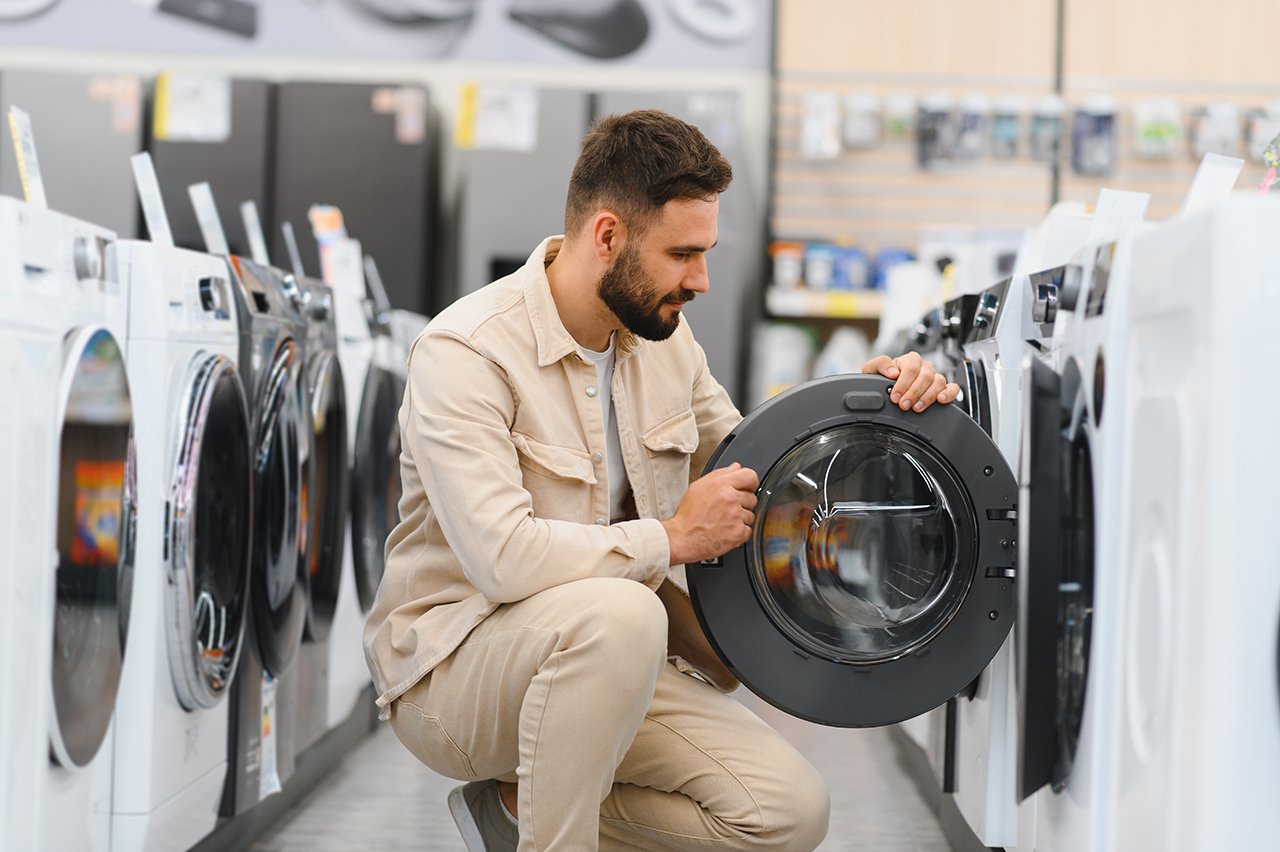
In our recent article, Spending with care: the current reality of big-ticket purchases in the UK, we explored how consumers are continuing to engage with major purchases, but with a more considered mindset. Spending has not stopped, but expectations around what feels manageable and worthwhile have shifted.
Automotive brings that mindset into sharper focus. It is a category where the financial commitment is high, the decision is rarely impulsive, and the consequences of getting it wrong feel more significant. As a result, it shows more clearly what consumers need to move from consideration to action.
Our data demonstrates what car finance providers need to be thinking about when shaping their propositions and customer conversations in 2026 and beyond.

The Authenticity Trade-Off: How AI is reshaping trust in advertising
As the Advertising Standards Authority increases its focus on misleading imagery, and platforms like TikTok continue to favour raw, unfiltered content, brands are facing a different kind of creative pressure. At the same time, categories like food are already under scrutiny through HFSS regulation, with higher expectations around realism and representation. This is the environment AI-generated advertising is entering.
AI offers clear advantages in speed, scale and cost. But our latest research at The Harris Poll UK suggests a more complicated picture. While AI may make it easier to produce advertising, it may also make it harder to earn belief.

The Forecast Effect: How weather apps are reshaping visitor behaviour
Whether it’s a family day out, a visit to a heritage site, or a spontaneous trip to a theme park, the British public increasingly turns to weather apps as their decision-making compass. For operators of outdoor attractions, these forecasts have become a critical, and sometimes frustrating, part of the visitor economy. Some attraction owners report that a single rain symbol can cost them up to £137,000 in a day, and our research supports the impact of rain in the forecast, with an increase from 20% to 40% for the chance of rain driving an incremental third of consumers to change their plans.
Based on a nationally representative survey of 1,000 UK adults, our latest research highlights a clear behavioural shift: weather apps are not just influencing decisions, they are actively reshaping them.

The Rise of the Concession Model: What UK consumers expect from modern retail
From Next’s acquisition strategy to the growing concession model trend, the UK retail landscape is being reshaped. The high street is undergoing a structural shift as large retailers acquire struggling brands and expand concession models, redefining how consumers experience retail.
But this is not simply a change in format. It signals a broader rebalancing in what consumers expect from retail. Shoppers are open to greater convenience and consolidation, but not at the expense of brand identity, discovery or experience.
For brands and retailers, this creates a new challenge. Growth may come from scale and efficiency, but long-term value will still depend on how well these fundamentals are protected and delivered.
GLP-1 and The New Era of Food Choice: A behavioural shift brands can no longer ignore
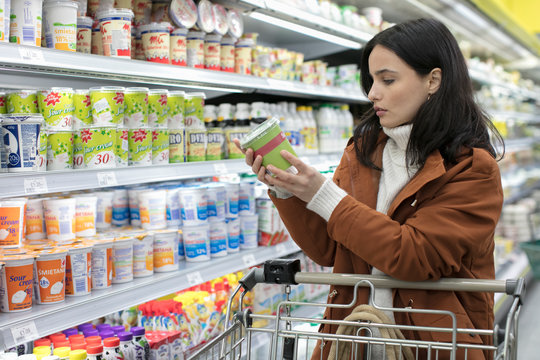
With an estimated 1.6 million people already using GLP-1 drugs in the UK, and our research indicating that one in four adults would consider trying them in the future, we may be approaching an important societal inflection point in how people think about food. This raises the question of whether a broader wave of dietary behaviour change could reshape eating habits now, and in the years ahead. ….
In this article, we explore current food trends and the ways GLP-1 weight loss drugs may already be influencing behaviour, helping brands anticipate what could be coming next.
Spending with Care: The current reality of big ticket purchases in the UK
Financial confidence in the UK remains fragile. Our latest Cost-of-Living data for Q1 2026 shows sentiment has deteriorated for three consecutive waves, with 62% now believing the economy is heading in the wrong direction.
Household finances are under pressure too. 56% say their financial position is unchanged versus last year and 25% say it has worsened, leaving just 19% feeling better off. Energy bills have risen again, food and drink prices are up 4.5%, and headline inflation reached 3.4% in December.

From Word of Mouth to Content at Scale: Why winning brands invest in community
Brand experience has entered a new phase. What people think, feel and do with your product or services no longer stays between them and their immediate circle. It travels.
Social platforms have turned everyday customer moments into public narratives, reshaping how brands are discovered, judged and recommended. At the same time, influence is fragmenting. Smaller creators, peer voices and dedicated communities are gaining ground over traditional brand-led communications.
The implication is straightforward. Brands are no longer the sole authors of their story. The organisations that thrive will be those that design experiences, partnerships and spaces with participation in mind, not just promotion.

Love in the Age of AI: Why technology isn’t killing romance
Romance has always reflected the times we live in. From handwritten letters to text messages, candlelit dinners to app-booked experiences, each generation finds new ways to say the same old thing: you matter to me.
So as artificial intelligence becomes part of everyday life, it’s natural to wonder whether something meaningful might be lost along the way. Are algorithms and automation quietly cooling the emotional warmth of love?
In the light of Valentine’s Day this weekend, we look at new data from The Harris Poll UK, which suggests the opposite may be true.

We’ll Try Driverless Taxis Before We Trust Them: The Autonomous Acceptance Gap explains why
A few weeks ago, I found myself sitting in the back of a fully driverless Waymo in Los Angeles. A friendly welcome from a calm, automated voice, a smooth pull-away from the curb, and the slightly surreal moment when your brain catches up with what your eyes are seeing… the steering wheel is moving, but no one is driving.
I won’t pretend it felt normal straight away. I trusted the technology intellectually; emotionally, that took longer. And with the announcement last week that driverless taxis will roll out in London later this year, it’s that exact tension that our latest research here in the UK brings into sharp focus.

How Winning Brands Build Advantage in 2026: Authenticity
As we begin 2026, one thing is already clear: organisations will continue to operate in a polycrisis as technological disruption, economic uncertainty and reputational risk collide. AI is reshaping experiences at speed, crises are unfolding in real time, and consumers are navigating a world that feels increasingly uncertain. In this environment, the brands and organisations that perform best are not those chasing every new tool or trend, but those with a clear sense of who they are.
A distinct signal can be seen in the data from our 2025 UK Reputation Index. Companies that are grounded in a clear sense of who they are will be better equipped to adapt, recover and lead amid change or uncertainty. Authenticity is not a positioning statement. It is the discipline of acting consistently, especially when conditions are challenging.
Authenticity provides clarity. It enables organisations to make confident decisions rather than reactive ones, and it helps consumers understand what a company stands for even as the world around it shifts.

A Nation of Nearly-There Achievers: How the UK really did with its 2025 goals
At this point in the year, goal-setting narratives typically split into two camps: success stories or silent guilt. But the reality for most UK consumers in 2025 sits somewhere a bit more measured and far more human. The Harris Poll UK has been tracking consumer mindset and goal achievement throughout 2025, and our latest data shows a nation that is ambitious, imperfect and still moving forward.

2025: The Year UK Consumers Took Control
UK consumers are rebalancing priorities, reassessing value, and seeking control - not just over their wallets, but over how they live, spend and connect. As we close the books on 2025, here’s our wrap-up of the four dominant themes we’ve seen in our ongoing research with UK consumers across sectors and social contexts this year.

Safety vs Savings: What brands must know as consumers reassess risk
As the cost-of-living crisis deepens, new data reveals a troubling shift: almost seven in ten Britons would consider choosing a less rigorously tested medication if the price was right. Despite valuing safety and quality above all else, rising costs are pushing many to make trade-offs they never expected to face. With trust wavering and concerns about authenticity growing, the pressure is mounting on brands—and the system—to help consumers feel protected.

Christmas 2025: Experience-Led, emotion-driven and redefining value
At The Harris Poll UK, we spend a lot of time listening—to what consumers are feeling, what they’re prioritising and how those choices are shaping brand relationships. And as we head into the 2025 festive season, the mood of the nation feels quietly optimistic.
Economic pressures may still be part of daily life, but people are finding new ways to create joy and connection. Even in tighter times, UK consumers are seeking moments that feel meaningful — swapping excess for experiences, nostalgia, and small everyday luxuries.